At 07:00 UTC on November 10, 2026, nine hours before Clonebid’s cart was due to open, the JVZoo checkout behind every “Own this influencer” button already showed a price: $297.00, single payment, with a 1-day return policy. The partner page sent to affiliates says the influencers are “individually priced from $397 to $997.” Those two numbers can’t both be the launch price, and that gap is the first thing I’d want a buyer to know.
Before anything else: the Clonebid links on this page are affiliate links, and if you buy through one I earn a commission from JVZoo. You pay the same price either way. It doesn’t decide what I write, and a fair amount of what follows is the kind of thing a vendor would rather I left out.
If you only want the short version: the Clonebid front end is where you pick one ready-made AI character, there’s a $497 website add-on that shows up right on that checkout, and a $997 custom influencer sold on its own page. My plain recommendation for launch day is to not buy anything until you have a written answer, from support, about what “delivered instantly” actually contains. I explain why below.
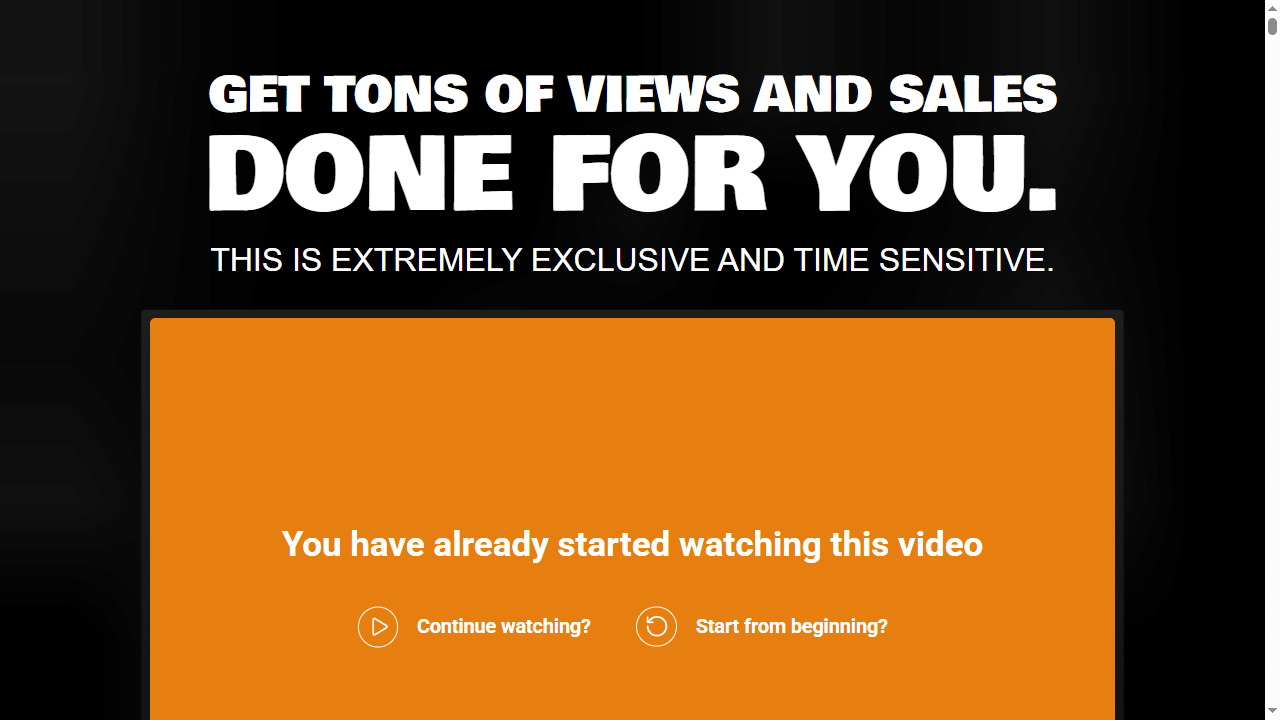
What these notes are based on: the Clonebid partner page (I read it on November 8 and 9, when it still said “Launch date TBA”, and again on the morning of November 10 when the dates and product IDs appeared), the MunchEye listing, the customer sales page and both upgrade pages on clonebid.com read on November 10, and the three JVZoo checkout pages for the products in the funnel, also checked on November 10. I have no access to Clonebid and haven’t bought a character, so nothing here describes what arrives in your inbox. When I say “the sales page says”, that’s all it is.
November 8 and 9: a launch with no product IDs
I started tracking Clonebid on November 8, when it sat at the top of MunchEye’s big launches for the week with a listed front-end price of 397 and 50% commission. The partner page at the time had no launch date (“Launch date TBA”), no JVZoo product IDs and a note that review access was “coming soon.” That was still true at 15:23 UTC on November 9, the day before launch. For a launch this size that is late. Most vendors I follow publish the funnel IDs a week ahead so affiliates can get approved.
By the morning of November 10 the page had been finished. It now gives a start time of 11:00 AM EST on Tuesday, November 10 (16:00 UTC), three JVZoo products, a 10% launch coupon and a $20,000 affiliate contest split over three phases ending November 16. One line on the partner page is worth repeating to buyers: “The end of the closing contest phase is not a confirmed cart-closing time.” In other words, nobody has promised the offer disappears on the 16th, whatever countdown you see.
What Clonebid says it sells
The idea is a marketplace of AI influencer characters. Each character comes with a niche, a personality, a “content angle” and a suggested way to make money, and each one can be sold to one buyer only. Once claimed, it’s marked as sold. The sales page puts it like this: “Instead of buying another course, template, or pile of instructions, you claim a fully developed character with its own niche, personality, content strategy, and monetization model already built in.” It also says the character “acts as a content creator, marketing coach… and project manager.”
The characters themselves are cartoonish on purpose. There’s a party-animal hedgehog called Johnny Walnuts who teaches internet marketing, a potato with a fast-food empire, a divorce lawyer with nine failed marriages, a four-inch bodybuilder training on a kitchen counter, a Sasquatch who reviews software from a campfire. Each card ends with a list of monetisation routes: affiliate offers, merch drops, sponsorships, ClickBank or JVZoo products, high-ticket coaching.
The sales page FAQ describes your part in four steps. You register “a Monetization account” (it names ClickBank, JVZoo or Fanvue), open a new or existing Instagram or TikTok account, and “post the videos and pics your influencer makes for you.” It also says you don’t tell the influencer what to make, because “it already knows what to do,” and that after signing up “you’ll get an instant email with the welcome AND your first content.” One more detail from that FAQ: characters with Fanvue in their description need a Fanvue account, because “it is one monetization source per influencer.”
The partner page is more careful than the sales page. It says the buyer “sets up the relevant social and monetisation accounts, then posts the content their influencer creates. Results depend on execution and audience response.” That sentence is the honest core of the offer, and I’d read it twice.
The funnel as listed vs. the funnel at checkout
Here is the funnel the way the partner page describes it, next to what the JVZoo checkout pages showed on the morning of launch day.
| Product (JVZoo ID) | Partner page price | Checkout, Nov 10 | Return policy on checkout |
|---|---|---|---|
| CloneBid Influencer, the front end (457733) | $397 to $997, “individually priced” | $297.00, single payment | 1 day |
| CloneBid Influencer Website (457735) | $597, called both “OTO1” and a “website bump” | $497.00, single payment, also offered as a bump on the front-end checkout | 14 days |
| Custom Influencer (457761) | $997 | $997.00, single payment | 14 days |
Three things stand out.
The $297 price. I counted the checkout links in the sales page code. There are 413 of them, one per character, and every single one sends you to the same JVZoo product with the same price parameter, 297.00. The page says “prices are based on potential reach and performance,” and the FAQ compares the pricing to a domain-name appraisal. On the morning of November 10 that wasn’t reflected anywhere in the checkout links: the hedgehog, the potato and the glamorous penthouse influencer all cost the same. That might change when the cart opens, and the vendors may still switch on tiered prices. For now, if a page in front of you says $397 or more, check the amount on the JVZoo form before you pay.
The 1-day return window. The front-end checkout reads “This product has 1 day return policy and will be handled by the product vendor.” The two upgrades say 14 days. One day is the shortest refund window I’ve seen on a JVZoo front end this year, and it matters more here than usual because you’re buying something you can’t preview: you find out what a character actually consists of only after paying. If the first email doesn’t arrive quickly, or isn’t what you expected, you have very little time to ask for your money back.
The website: OTO or bump, custom or ready-made? The partner page calls it “A custom website to accompany the buyer’s influencer business” at $597. The checkout sells it at $497, and it appears as a tick-box on the front-end order form, so many buyers will see it before they ever reach an upsell page. The website sales page doesn’t describe a custom build at all. It’s a second marketplace: 54 named domains, each with a ready-made site, and 36 of them already marked SOLD when I looked. So “custom” on the partner page and “pick one of our finished sites” on the sales page don’t describe the same thing.
The website upgrade, read closely
The website page lists domains like BuyerBlaster.com, ProfitWeapon.com, MemoryIgnite.com, FatBurnReboot.com and MediaProductionCenter.com, each with a paragraph about the niche. The descriptions vary. Some say “a fully built autopilot website designed for ClickBank monetization.” Some go further and say the site “comes with the domain transferred to you, a professional direct-response website and a conversion-focused funnel,” plus “processor integration” and “an AI assistant that can answer your questions and help you operate the business.” A few mention a “complete digital product, members area, sales funnel and upsells,” and several suggest you could “flip the entire asset later on Flippa.”
Every one of the 54 buy links on that page goes to the same product, 457735, at the same $497 price. That’s fine if you just want a decent domain with a site on it, but the page doesn’t tell you which sites include a domain transfer, which include a digital product of your own and which are an affiliate review site. Those are very different things to own. A transferred .com with a funnel and your own product is a real asset. A ClickBank review site on a domain you don’t control is not.
If this upgrade appeals to you, the questions are simple: is the domain transferred into your own registrar account, and when; who hosts the site and for how long; and does the product inside it belong to you, with resale rights, or is it someone else’s offer you promote as an affiliate.
The custom influencer, $997
The custom page is the shortest sales page I’ve read in a while. In full, the pitch is: “Get a custom influencer. We will build your custom influencer at your total direction.” Then a buy button and a disclaimer. No turnaround time, no description of what is built, no mention of revisions, no examples. The partner page adds only that it is “an influencer designed specifically for the buyer, with their own custom concept.”
For $997 that’s not enough information to buy on. I’d want the delivery time, what you supply (a description? reference images? a voice?), how many revision rounds you get, and whether you own the resulting character outright. The 14-day return policy on the checkout helps, but if delivery takes longer than 14 days, it doesn’t help much.
The SOLD labels, before the cart opened
On the morning of November 10 the main sales page showed 184 characters with an “Own this influencer” button and 236 labelled SOLD. On the website page, 36 of 54 were labelled SOLD. This was several hours before the 11:00 AM EST start on JVZoo.
I don’t know what those SOLD labels mean. They could be characters claimed during an earlier soft launch, characters reserved for affiliates and reviewers, or labels placed for effect. The sales page leans hard on scarcity (“Wait too long and your ideal influencer may belong to someone else”, “One character. One owner. One shot to claim it”), so it’s worth asking support how a character could be sold before the public cart opened. If it was an earlier round of sales, that’s useful: ask whether any of those buyers have results they’re willing to share.
Claims I’d check before paying
A few lines on the sales page carry a lot of weight, so here they are with what I can and can’t confirm.
- “Delivered instantly” and “your first content” by email. The FAQ promises a welcome email and the first piece of content right after purchase. Nothing on the page says how much content follows, how often, or for how long. “It creates the content while you focus on collecting the revenue” suggests ongoing production, but there’s no number anywhere: no videos per week, no months of service, no credits. That’s the single biggest unknown in the offer.
- “Tried and tested and converts.” The FAQ answers “Big time!” to whether the system is proven, and says “our top converters are all AI.” It doesn’t show a single account, follower count or sale. The disclaimer at the bottom says claims of actual earnings “can be verified upon request,” so request it.
- Commission figures. The FAQ says “50-70% is the norm for digital products” and “3-10% for physical products.” Those are typical affiliate rates, not Clonebid results, and they tell you nothing about how much your character will sell.
- “Infinite paydays.” That’s on the sales page. The same page ends by saying there is “an inherent risk of loss of capital and there is no guarantee that you will earn any money.” The disclaimer is the accurate one.
What one buyer spends: three paths
These totals use the checkout prices from November 10 and the launch10 coupon, which the partner page says takes 10% off “the Front End and both upgrades.” I haven’t tested the coupon at checkout. VAT is added depending on where you live: my form added $71.28 to the $297 front end, so budget for that if you’re in the EU or UK.
- One character, $297 (about $267.30 with launch10). This is the only path I’d consider without more information from support, because it’s the cheapest way to find out what a Clonebid character actually is. Untick the website box unless you’ve already decided you want it. Remember the 1-day window.
- Character plus website, $794 (about $714.60). Only makes sense if support confirms the domain transfers to you and tells you what’s on the site. The website price is the same for all 54 domains, so pick on niche, not on the description length.
- Everything, $1,791 (about $1,611.90). Front end, website and custom influencer. At the partner-page prices the same basket would be $1,991 to $2,591. I wouldn’t spend this on a product nobody outside the vendor team has shown working, and I’d find it hard to justify the custom character before you’ve seen what a standard one looks like.
The JV page’s own commission calculator shows an affiliate earning $1,295.50 from a single buyer who takes a $997 character, the website and the custom influencer. That’s useful for understanding why this launch will be heavily promoted this week: the incentives on the affiliate side are large. It doesn’t tell you anything about the product.
Who’s behind it
The launch is run by Jamie Lewis and Simon Warner. The JVZoo checkout lists Jamie Lewis as the creator, and the support link on the custom-influencer page points to a champsites.com address. Simon Warner’s name has been on JVZoo launches for years; I listed his Videvolve video funnel here back in 2022. This is a different kind of product from a software app, though. With software you can usually judge the tool from a demo. With Clonebid the thing you’re buying is a character plus a promise of content, and the value depends almost entirely on what happens after the sale.
Compared with the AI funnels I’ve covered this autumn, Clonebid is also unusual in what it doesn’t have. There’s no Pro or Unlimited upgrade, no credit system, no agency licence and no bundle. Three products, all single payment. That’s simpler than most launches, and I’ll give it credit for that. The trade-off is that the pricing has no visible link to usage, so you can’t work out what a month of content costs you.
Questions to send support before you buy
- What exactly is delivered for $297: a set of images and videos, access to a generator, a GPT, an account login? How many pieces of content, and over what period?
- Does content keep coming after the first email, and is there any ongoing cost to keep the character producing?
- Is the front-end price $297 for every character, or will tiered $397 to $997 pricing apply after the cart opens?
- Is the refund window really 1 day for the front end, and does it start at purchase or at delivery?
- Do you own the character’s name and likeness, and can you resell it?
- Is the content labelled as AI-generated, and does it fit TikTok’s and Instagram’s own rules for AI content?
- How were 236 characters sold before the JVZoo cart opened?
- For the website: is the domain transferred to your own registrar account, who hosts the site, and is the product inside it yours?
- For the custom influencer: delivery time, revisions, and what you need to supply.
Launch-day log
- Nov 8: MunchEye lists Clonebid at 397, 50%. Partner page: “Launch date TBA”, no product IDs.
- Nov 9, 15:23 UTC: partner page unchanged, still no IDs.
- Nov 10, about 07:00 UTC: partner page finished, with launch time 11:00 AM EST, IDs 457733 / 457735 / 457761, coupon launch10 and the contest schedule. Checkouts: front end $297 (1-day returns), website $497 (14 days), custom $997 (14 days). Sales page: 184 characters available, 236 marked SOLD. Website page: 18 of 54 available.
I’ll recheck the checkouts after the cart opens at 16:00 UTC and add any price change to this log with the time I saw it.
Short answers
How much does Clonebid cost on launch day?
The JVZoo checkout showed $297 for a character on November 10, with a $497 website add-on and a $997 custom influencer, all single payments. The partner page lists $397 to $997 per character, so check the amount on the order form.
What is the refund policy?
The front-end checkout says 1 day, handled by the vendor. Both upgrades say 14 days.
Is there a coupon?
The partner page gives launch10 for 10% off the front end and both upgrades. I haven’t applied it myself, so confirm the discount shows on the form before paying.
Do I need my own social media and payment accounts?
Yes. According to the sales page FAQ, you open an Instagram or TikTok account, register with ClickBank, JVZoo or Fanvue depending on the character, and post the content yourself.
A last word on money: I’m an affiliate for Clonebid through JVZoo and earn a commission on sales made through the links above, at no extra cost to you. Neither Jamie Lewis nor Simon Warner has paid for or seen this article, and I haven’t used the product.
📅 Never miss a launch again
See every upcoming AI software launch with dates and the full OTO pricing before you buy, and get a free email alert the moment a launch goes live.